Most parents have the toothbrushing routine down, even if it sometimes takes a little negotiating. Flossing is another story. Many families are not sure when to start, how to do it on tiny teeth, or whether it really matters for baby teeth. The short answer: it matters, and it can be easier than you think. Here is a practical guide for Littleton parents.
Why Flossing Matters for Kids
A toothbrush does a great job on the front, back, and chewing surfaces of teeth. What it cannot reach well are the tight spaces between teeth. Food and plaque that collect there can lead to cavities between teeth, which are often hard to see at home.
Flossing helps:
- Remove plaque and food from between teeth where brushes cannot reach
- Lower the risk of cavities that form between teeth
- Keep gums healthy and reduce bleeding or puffiness
- Build a lifelong habit that becomes second nature by the teen years
When to Start Flossing
A good rule of thumb is to begin flossing as soon as two of your child's teeth touch each other. For many children, this happens somewhere between ages two and three, often with the back baby molars, but every child is different. Some kids have natural gaps between their baby teeth, which can delay the need a bit.
If you are not sure whether your child's teeth are touching, ask at your next checkup. Your child's dentist can show you exactly where to focus.
Flossing by Age: What to Expect
Toddlers and Preschoolers
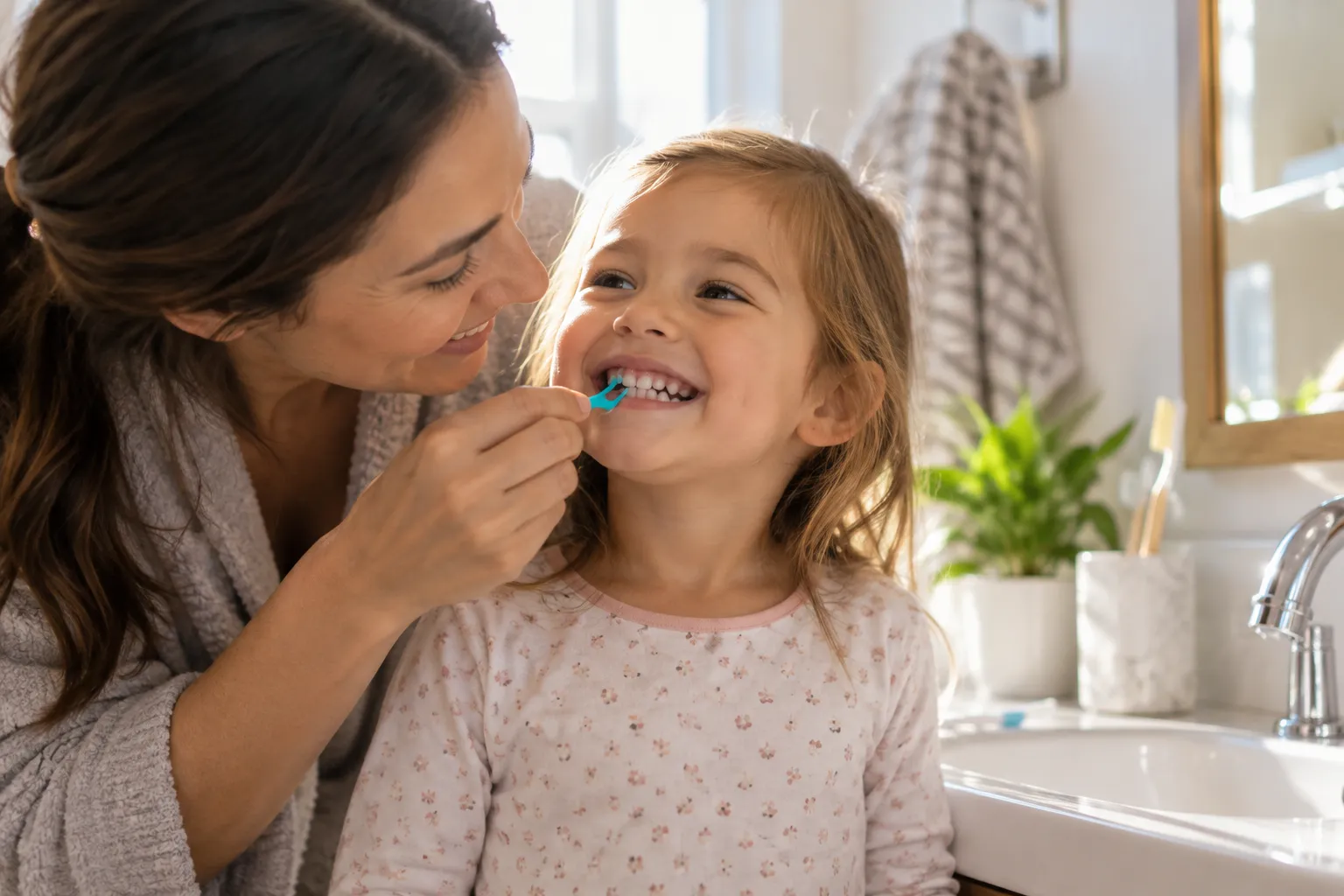
- Parents do the flossing. Little hands are not ready yet.
- Floss picks or flossers with handles are often easier than string floss.
- Have your child lie down with their head in your lap for better visibility.
- Keep it short and positive. Even a few teeth is a good start.
Early School Age
- Continue flossing for your child, but let them try a few teeth on their own.
- Many kids are ready to floss more independently around ages eight to ten, though they often still need checks.
- Fun flossers in bright colors or kid-friendly flavors can help.
Tweens and Teens
- Most can floss on their own, but reminders still help.
- Braces or other orthodontic appliances make flossing more important and a bit trickier. Floss threaders or water flossers can be helpful.
How to Floss a Child's Teeth
Here is a simple technique to follow:
- Use about 18 inches of floss, wrapping most around your middle fingers, or use a floss pick.
- Gently slide the floss between two teeth. Avoid snapping it down onto the gums.
- Curve it into a C shape around one tooth and move it up and down.
- Repeat on the neighboring tooth, then move to the next space.
- Use a clean section of floss as you go.
A little bleeding at first can be normal when gums are not used to flossing. If bleeding continues after a week or two of regular flossing, mention it to your child's dentist.
Tips to Make Flossing Stick
- Pick a consistent time. Bedtime, right before brushing, works well for most families.
- Make it a team activity. Kids love to copy parents, so floss together.
- Use a sticker chart or small rewards for younger kids.
- Let them choose their flosser color or flavor.
- Keep it positive. Praise effort, not perfection.
How Your Pediatric Dentist Can Help
Regular cleanings and exams are a great time to get hands-on coaching. Our team can show you and your child the best technique, point out areas that need extra attention, and check for early signs of cavities between teeth. Many kids find that hearing it from the dentist makes flossing feel more important.
Common Flossing Questions From Parents
- Are water flossers okay for kids? They can be a helpful addition, especially for kids with braces, but many dentists still recommend traditional floss or floss picks as the main tool for younger children. Ask what works best for your child.
- What if my child gags or fights it? Start with just the back teeth, keep sessions very short, and try again the next night. Patience usually pays off.
- Is once a day enough? Yes. Once a day, usually before bedtime brushing, is a great goal for most kids.
- Do baby teeth really need it? Yes. Cavities in baby teeth can cause pain and affect the permanent teeth developing underneath, so keeping the spaces between them clean is worth the effort.
Flossing Is a Gift That Lasts
Starting early helps flossing become as routine as brushing. The habits your child builds now can help protect their smile for decades to come.
Schedule a Checkup and Flossing Lesson
Want a little help getting started? Contact Sprout & Bloom Pediatric Dentistry to book your child's next visit in Littleton, and we will be happy to share flossing tips tailored to their age and smile.